Description
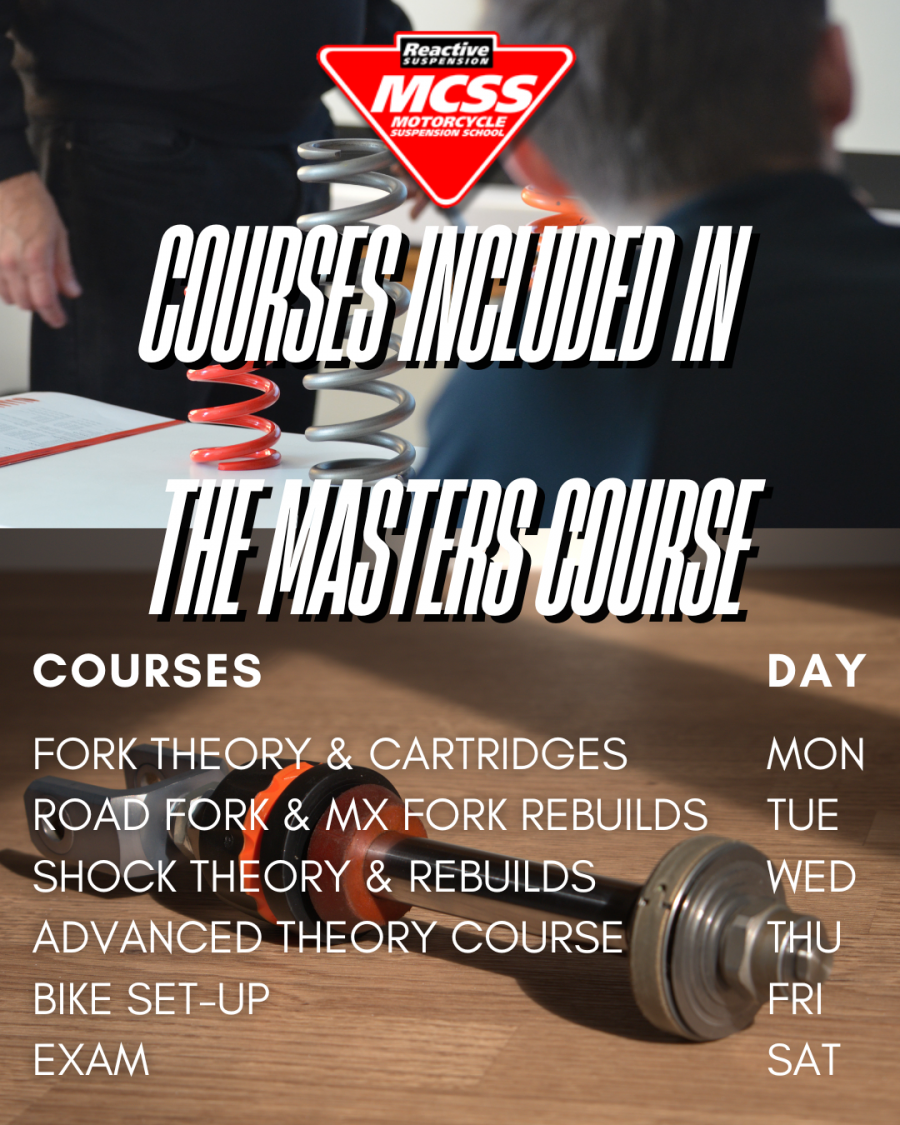
This program encompasses the Master Technician Course, Advanced Dyno Testing Course, and Damper Pressure Testing Masterclass within a single offering. The schedule consists of eight rigorous days designed for participants seeking comprehensive training.
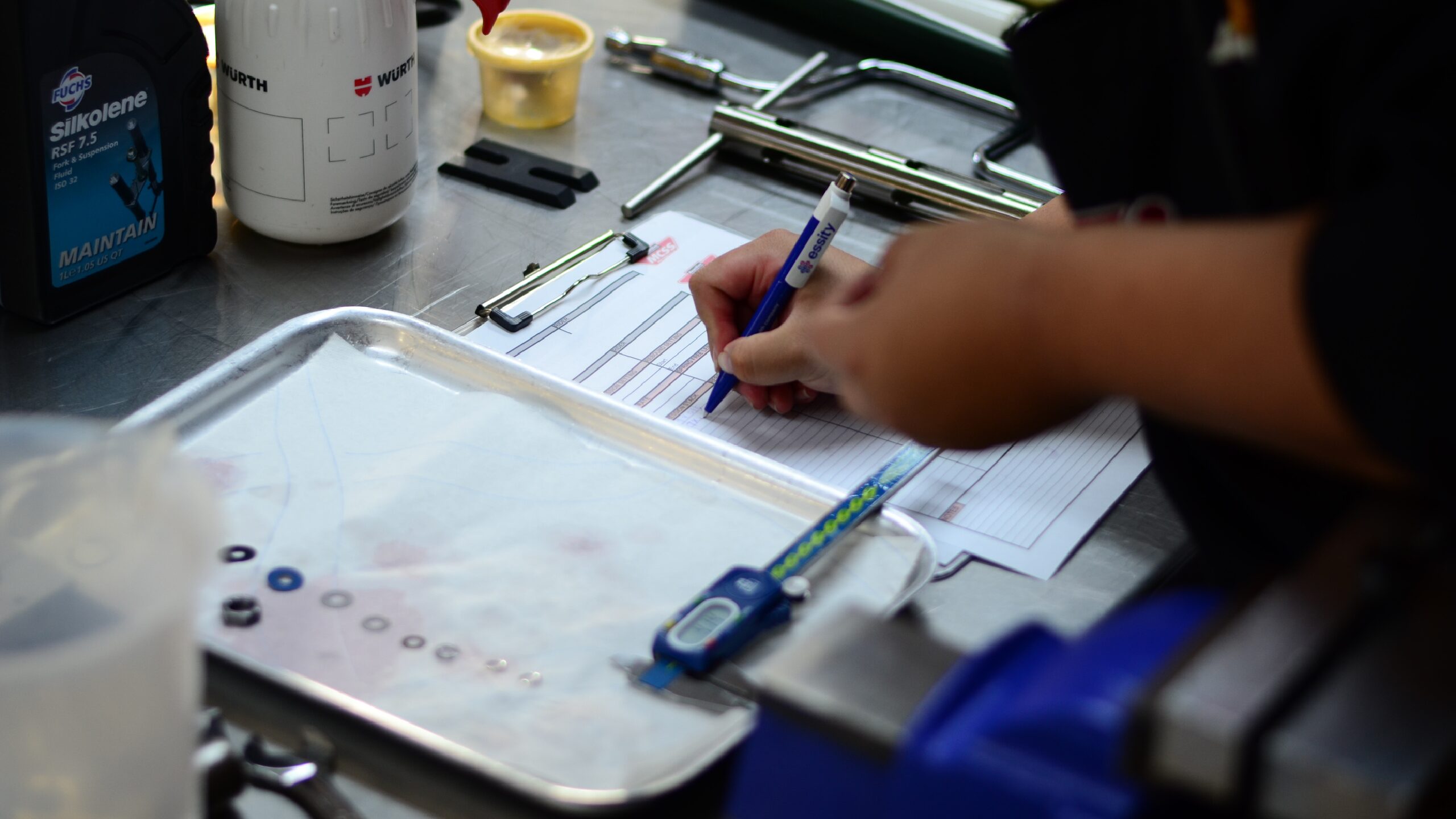
The Complete Program includes eight days of intensive instruction, integrating practical assessments throughout and culminating in a formal theory examination held on Saturday morning.
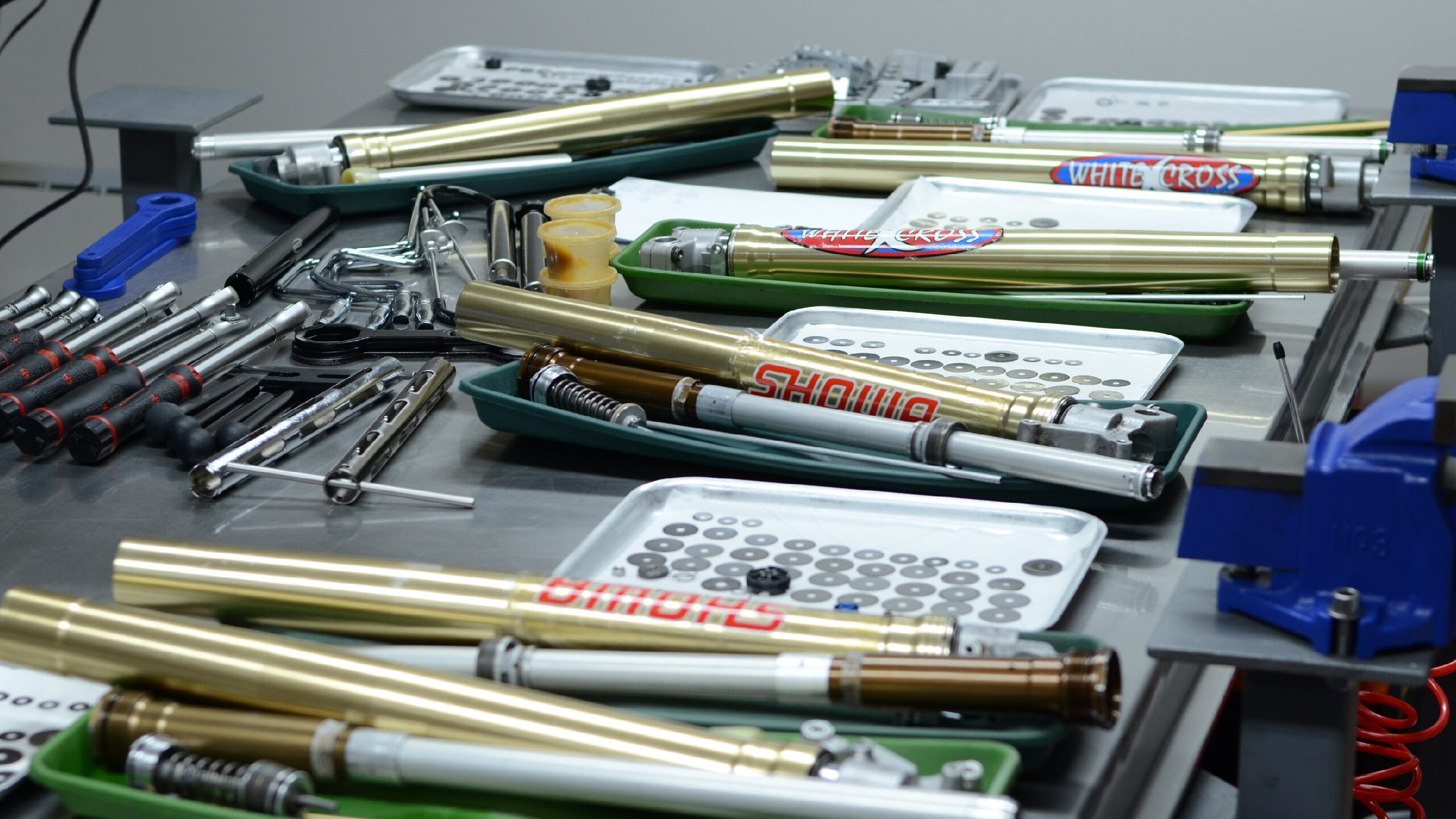
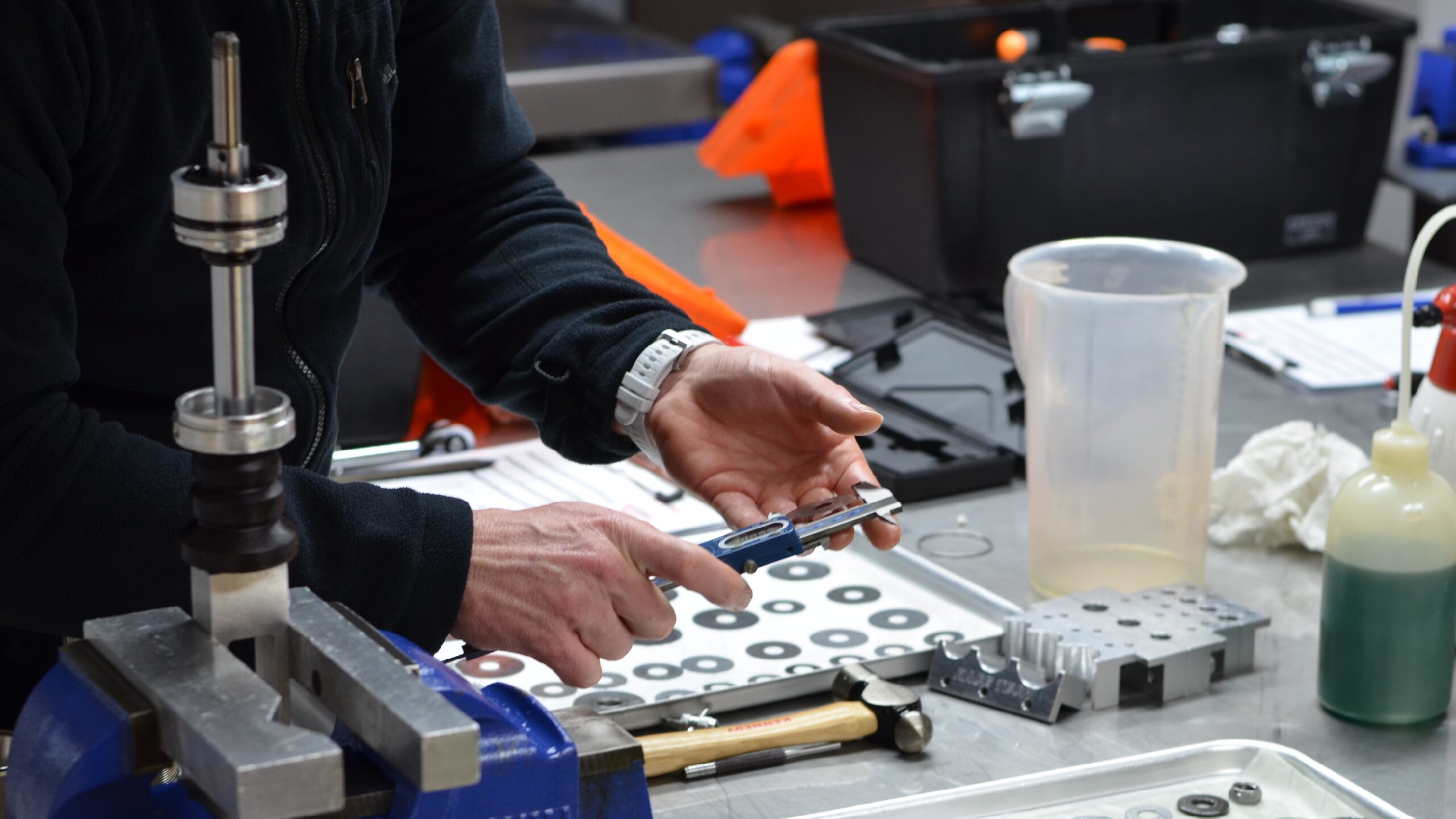
Hands-On Fork & Shock Work
- Practical exercises to understand real-world behavior.
Springs, Damping & Oil Dynamics
How springs, damping, and fluid properties influence suspension performance.
Component Function Analysis
- Deep dive into each suspension component and its role.
Friction & Stiction Effects
- Understanding how internal friction impacts response and smoothness.
Response Time Optimization
- Techniques to enhance suspension reaction speed.
Advanced Fork & Shock Theory
- Base valves, mid-valves, big piston, twin-tube systems, closed chamber designs.
Specialized Fork Systems
- Separate function forks, pneumatic spring forks, and their unique characteristics.
Piston & Rod Design
- Size, geometry, and performance implications.
Valving Techniques
- Pressure balancing, cavitation control, and hysteresis management.
Chassis Dynamics & Grip
- How suspension tuning affects handling, traction, and rider confidence.
Terrain-Specific Tuning
- Adjustments for different surfaces, conditions, and riding styles.
Damper Design Fundamentals
- Understand how damper design and internal architecture influence performance and tuning outcomes.
Pressure Dynamics in Dampers
- Analyse pressure differentials within the damper and their impact on force generation and consistency.
Friction & Stiction Control
- Identify and minimize friction and stiction effects that distort dyno results and on-track behaviour.
Damper Response Time
- Evaluate damper response time and its effect on suspension performance under dynamic conditions.
Piston Design Effects
- Assess how piston designs alter damping curves
Cavitation & Hysteresis Diagnosis
- Detect and diagnose cavitation and hysteresis using dyno data and testing methods.
Dyno Operation & Setup
- Operate and configure a damper dynamometer (dyno) for accurate, repeatable testing.
Dyno Data Interpretation
- Interpret dyno graphs and data to make informed suspension tuning and design decisions.
Chamber Pressure Fundamentals
- Basics of chamber pressures and their impacts.
Reservoir Pressures
- Overview of reservoir dynamics.
Compression & Rebound Pressures
- Compression and rebound chamber influences.
Pressure Differential Analysis
- How pressure differences affect performance.
Force Calculation Principles
- Methods for calculating forces from pressures.
Pressure Balancing Techniques
- Explaining pressure balancing with real-world examples.
Potential attendees shouldn’t be intimidated by the thought of an exam, we have provisions in place to help all students.
The exam covers the fundamentals of supension design, theory and bike set-up. Students passing the exam will have proven they have a thorough understanding of the subject at a level well regarded in the industry.
Previous attendees of the courses, or technicians that have been working in the industry that would like to undertake the practical assessments and theory exam should contacts us for details.
We will also have refresher training available for those that don’t want to go straight into an exam.
There will be three grade levels: Pass 50% or above, Merit 60% or above, Distinction 70% or above.
Reviews
There are no reviews yet.