Shock Absorber Temperature
Where Does Shock Absorber Heat Actually Come From? We Ran the Tests So You Don’t Have to Argue About It.
Shock fade is a common complaint. When damping drops off, most people start looking at the reservoir. The data says they’re looking in the wrong place.
Where does the temperature in a shock come from? We could go on the internet forums and see what “Fred in his shed” has to say on the matter, or we can run some tests. At the Suspension School we test the theories. What follows is based on data from our own dyno and instrumentation, not forum consensus.
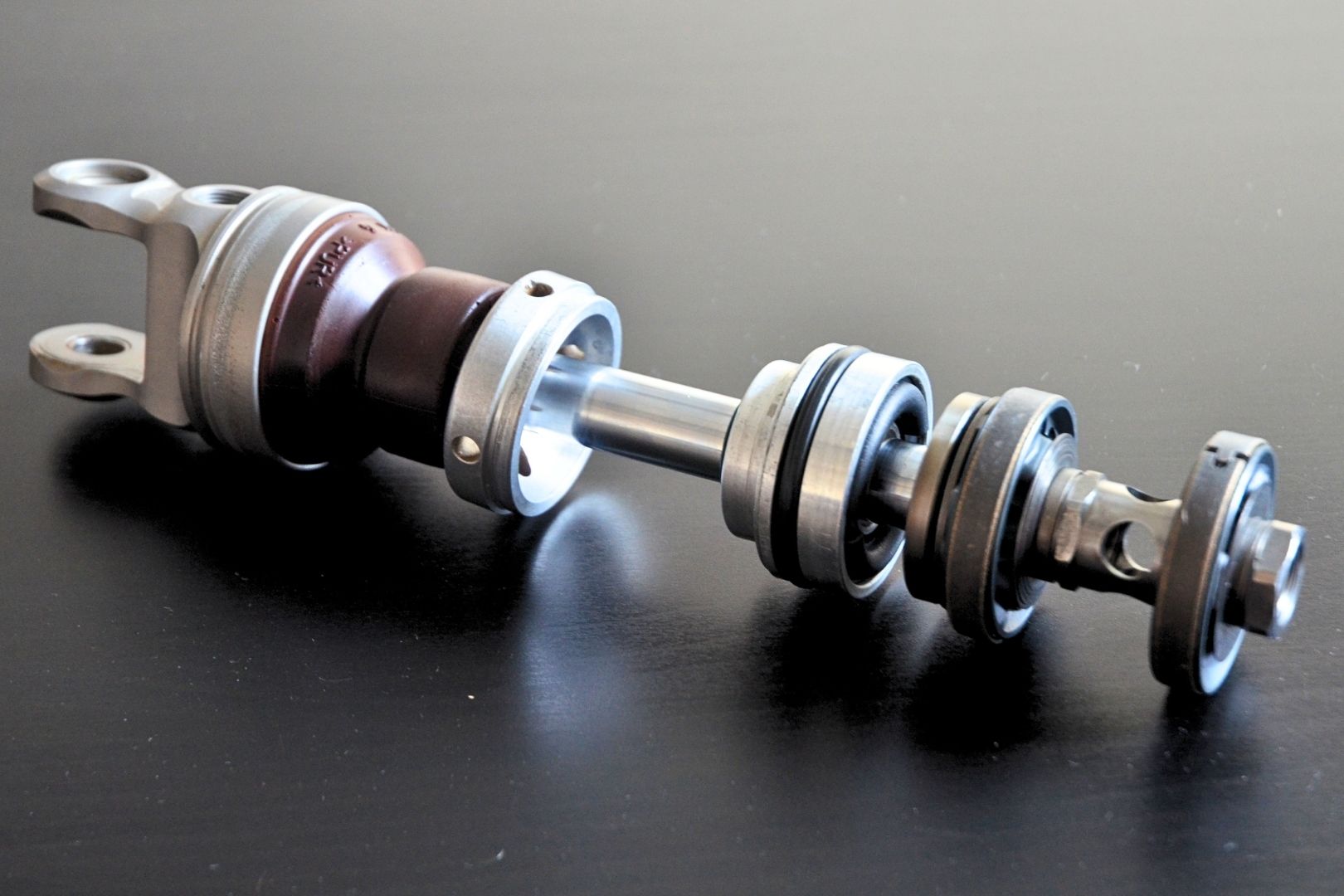
We have a high-quality shock with a hose mounted reservoir. The hose-mounted reservoir was specifically chosen so we could measure body and reservoir temperatures independently — no heat transfer between them means we can see exactly where the heat is being generated, not just where it ends up.
We have a temperature datalogger with which we can record the data from six thermocouples.
We’ve mounted the thermocouples in the following positions:
· on the body where the main piston is running up and down
· at the top of the body
· on the outlet hose fitting as it comes out of the body
· the hose fitting as it goes into the reservoir
· the oil chamber in the reservoir
· the gas chamber in the reservoir
The shock has stiff damping so it builds temperature quickly. We set the dyno running at a high velocity until 90°c was reached somewhere on the shock. Then let it cool.
We then ran another fast test whilst there was some residual heat.
We let it stand again and ran a slow test over a much longer period.
Key to graph colours:
· Dark purple; body temp at piston.
· Gold; top of body
· Green; hose fitting at body
· Silver; hose fitting at reservoir
· Blue; reservoir oil chamber
· Cerise; reservoir gas chamber
The number that matters here is the difference between the body temperature at the piston and the temperature arriving at the reservoir. In the first run the body hit 89.7°c. The oil arriving at the reservoir reached 48.4°c. That’s not a small difference — almost half the heat stays in the body and never reaches the reservoir at all.
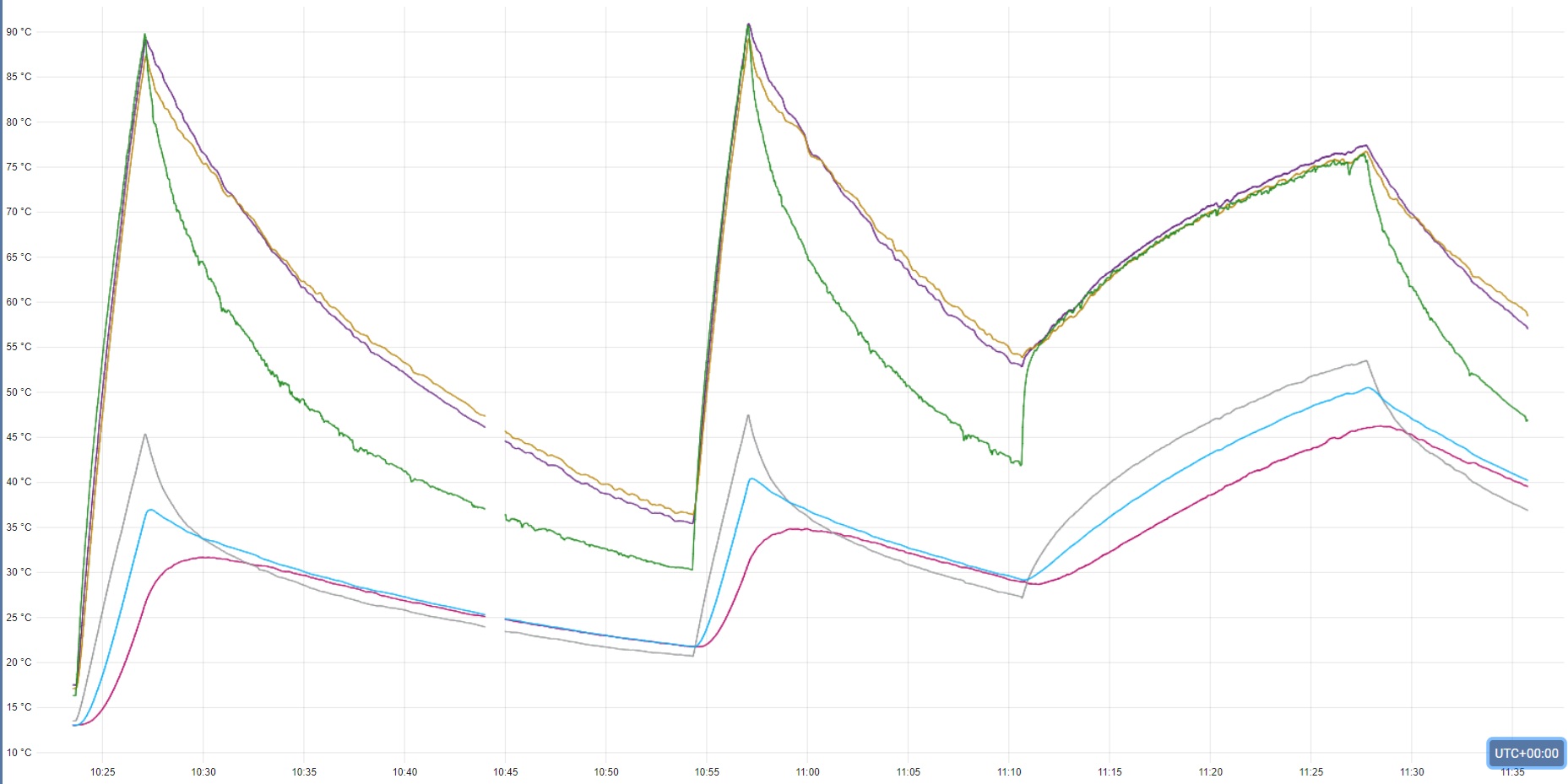
In the first run it took 3 minutes 25 seconds for the body temperature to rise from 16.2°c to 89.7°c. The inlet temperature into the reservoir rose to 48.4°c. There’s little heat transfer up the hose.
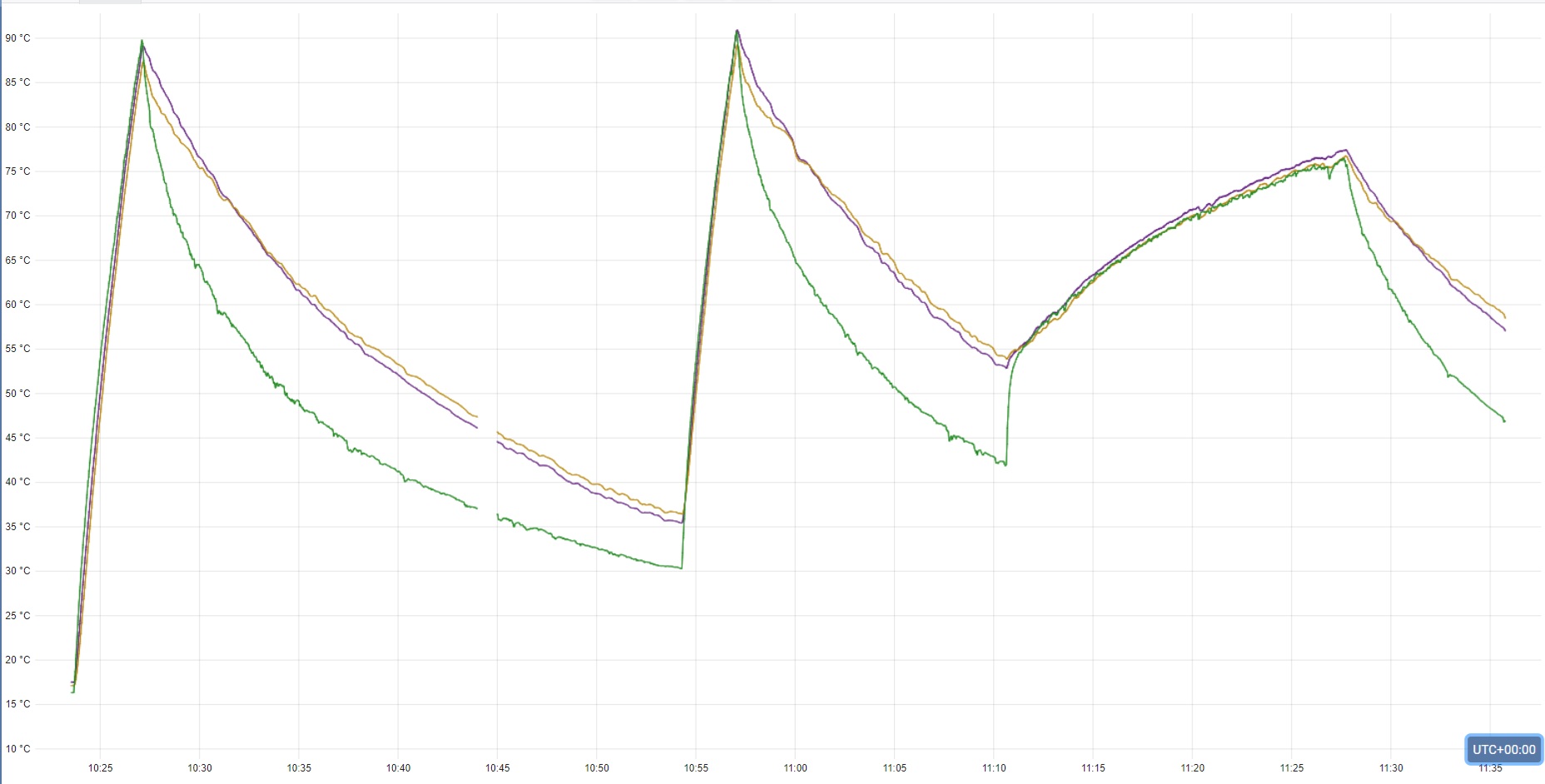
Separating out the body temperatures shows fairly even temperatures during the runs, but the bigger thermal mass of the body holds onto the heat during the cooling time.
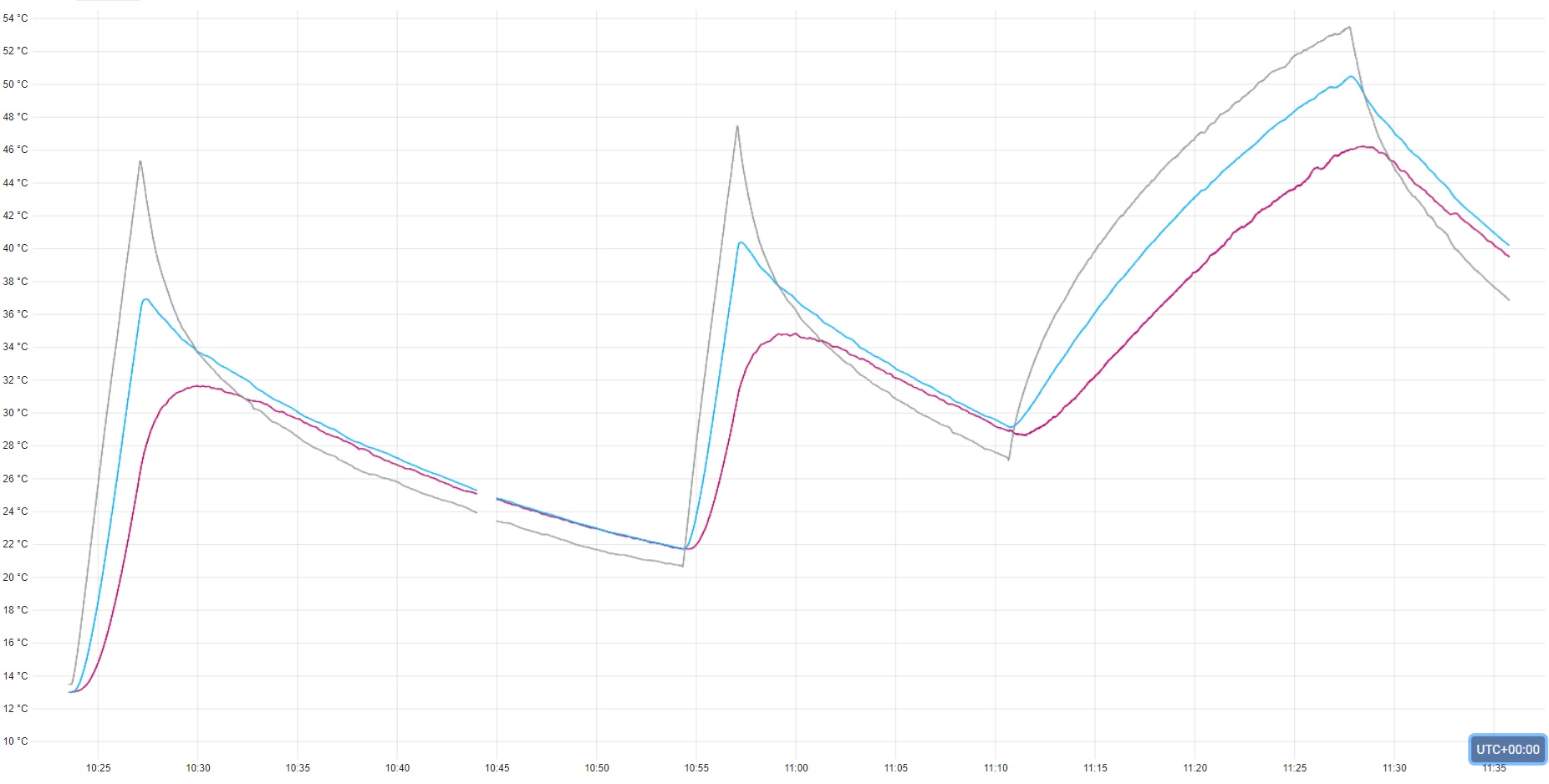
The reservoir temperatures don’t show any kicks in the oil and gas temperatures where the friction from the ifp adds heat. There’s a clear difference between the inlet temperature and the oil reservoir temperature through the runs.
The main piston is generating about 75% of the damping in this shock, the fade in the damping experienced by this shock isn’t coming from the temperature in the reservoir, it’s coming from the temperature in the body.
That changes where you look when a shock is fading under load. It also changes how you think about shock selection, fluid specification, and what the reservoir is actually there to do — which isn’t primarily heat management in the way most people assume.
If you’re working on a bike with consistent fade complaints and you’ve been focused on reservoir cooling or reservoir changes, such as bladders, this is worth revisiting. The fix and the fault aren’t in the same place.
Temperature management and what actually causes fade are covered in depth in the Master Technician Course. If you’re diagnosing damping issues without this foundation, the data above shows why that’s a problem worth fixing.
Details on the Master Technician Course can be found at: