Is Cavitation Killing Your Shock?
How Cavitation Destroys Shock Absorbers
When most riders think about suspension failure, they picture bent shafts, blown seals, or oil leaks. But some of the most destructive forces inside a shock absorber are invisible, microscopic bubbles that form, collapse, and eat away at internal components. The tiny bubbles not only negatively affect damping performance, but they also damage components. Understanding them is essential for anyone who tunes or services suspension.
The Birth of a Bubble: Cavitation in a Shock
Inside every shock absorber, oil is forced through valves and orifices. Under extreme pressure changes, especially during fast changes of direction of the shaft, or sudden impacts, the local pressure can drop below the vapour pressure of the oil. When that happens, tiny vapour bubbles form.
This is cavitation.
It’s not aeration (air mixing with oil). It’s not foaming. Cavitation is the oil itself vaporising under low pressure, creating micro‑voids that collapse violently when pressure returns.
The Collapse: Why Cavitation Is So Destructive
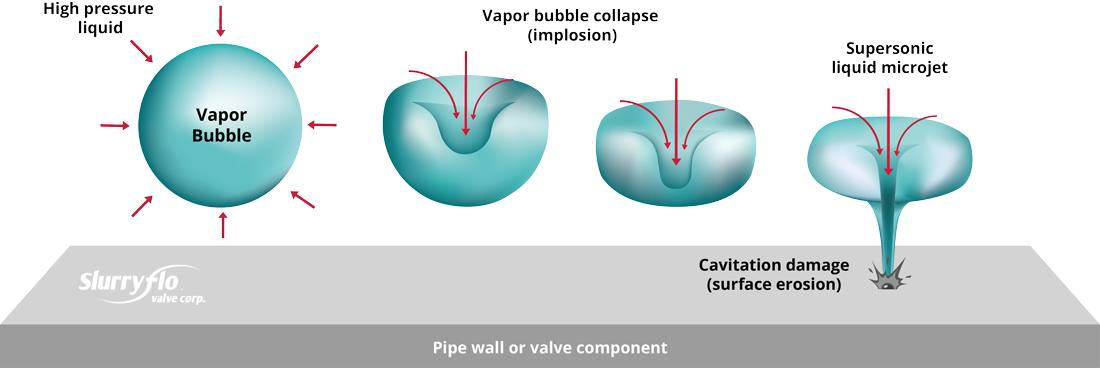
When a cavitation bubble collapses, it doesn’t simply disappear. It implodes.
That implosion creates:
- Localized shock-waves
- Micro‑jets of fluid
- Intense, pinpoint pressure spikes
In hydraulic systems, these forces are strong enough to erode metal surfaces and shock absorbers are no exception.
What cavitation can damage inside a shock:
- Piston faces
Micro‑pitting can impact shim sealing and flow characteristics. - Shims
Repeated cavitation can cause shim flutter, fatigue, and eventual cracking. - Shock bodies
Pitting eats away at the body tube negatively impacting piston sealing. - Oil itself
Cavitation accelerates oxidation and viscosity breakdown.
Over time, these microscopic events accumulate into measurable performance loss.
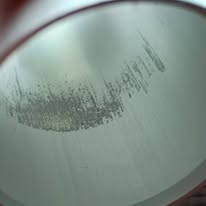
How Cavitation Shows Up in Real-World Performance
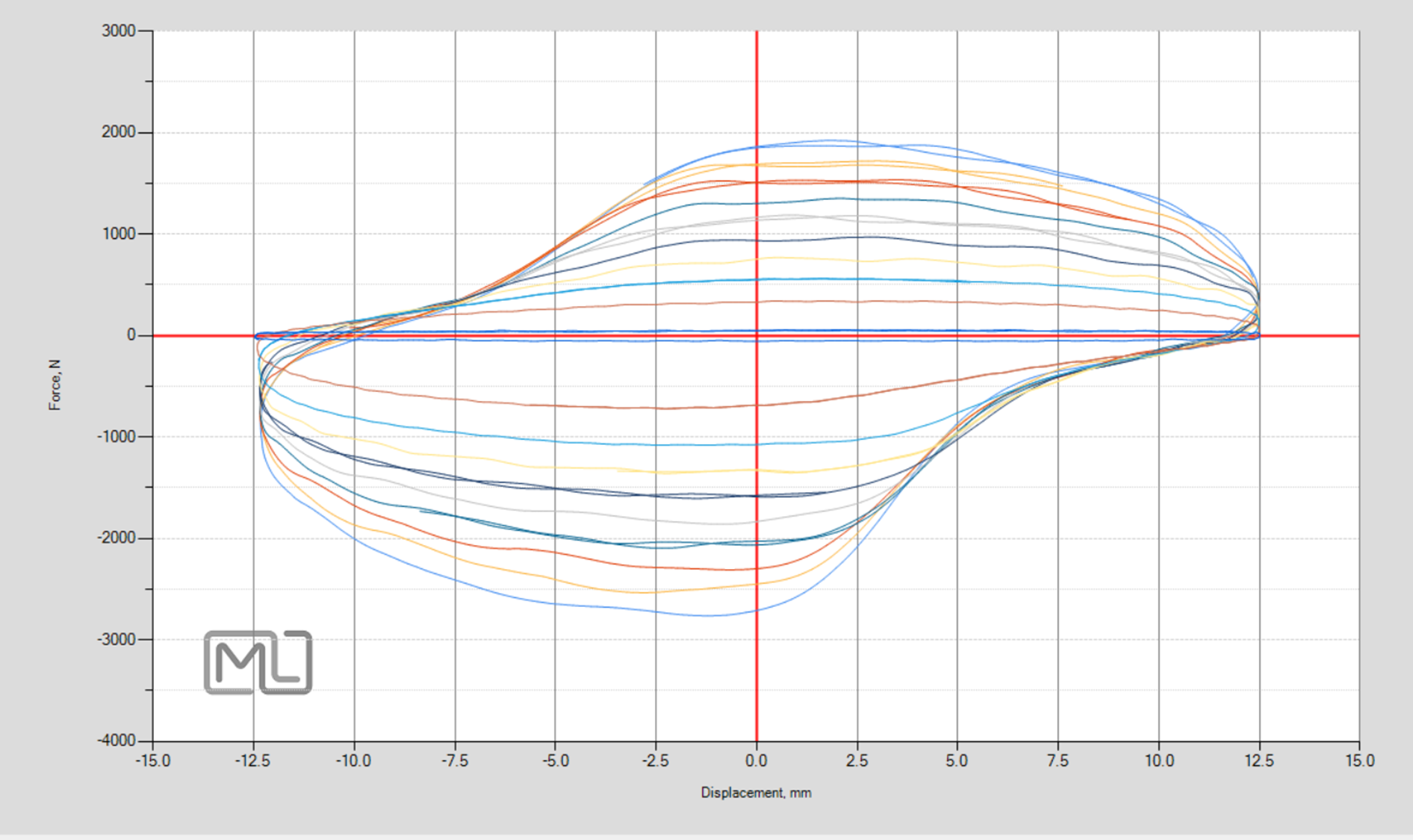
Even before physical damage becomes visible, cavitation affects damping behaviour. The dyno chart shows how the build up in compression force (top half of the graph) is delayed from bottom dead centre, (the left of the graph), building to nearly 2000N.
At top dead centre (the right of the graph) the force build up in rebound is again delayed during the rebound stroke (bottom half of the graph) eventually building to over 2500N.
Why Gas Pressure Matters
The nitrogen charge is the primary defense against cavitation. Higher gas pressure raises the oil’s effective boiling point and reduces the chance of low‑pressure zones forming
Too low a gas charge is one of the fastest ways to invite cavitation damage.
Cavitation on the Dyno: What Technicians Should Look For
As a suspension technician, you’ll see cavitation expressed as a delay in the build up in force in the opening phases of the dyno graph. (as above), or a whistling from the shock, particularly during fast strokes
During the first dyno run in the video you can hear a high pitched whistle from the shock. The gas pressure was then increased and you can hear the whistling and cavitation has stopped.
If you hear a shock whistle on the dyno, that’s not air, that’s oil vapor collapsing.
Cavitation is a failure mode that’s easy to overlook precisely because it starts invisibly. By the time pitting is visible on a piston face or a shim has cracked, the damage has been done. Understanding the role of gas pressure, recognising the signs on the dyno, and listening for that telltale whistle are the difference between catching a problem early and replacing components unnecessarily. It’s the kind of knowledge that separates a suspension technician from a suspension engineer.”
Details on courses can be found at: