Air Springs: Why They Feel Different, and the Physics Behind the Inconsistency.
Air springs have been around for a long time, every fork has an air chamber above the oil, and that trapped air contributes to bottoming resistance. However modern forks that use an air cartridge to replace the steel spring behave very differently.
This post breaks down the real physics behind air springs, that many people overlook.
1. The basic difference: Hooke’s law vs. gas law
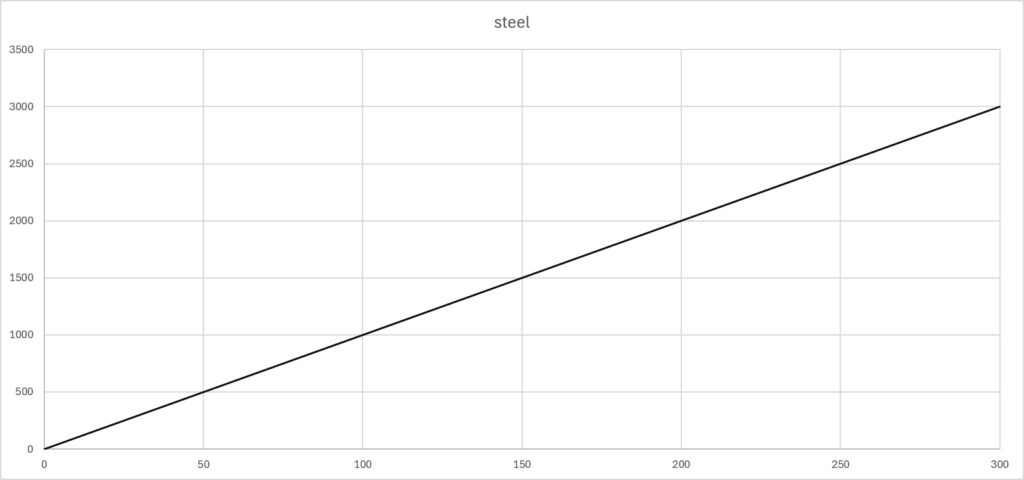
A steel spring is very simple; it follows Hooke’s Law:

The force is equal to the spring rate multiplied by the displacement. It doesn’t care how fast you compress it, how hot it gets, it’s repeatable.
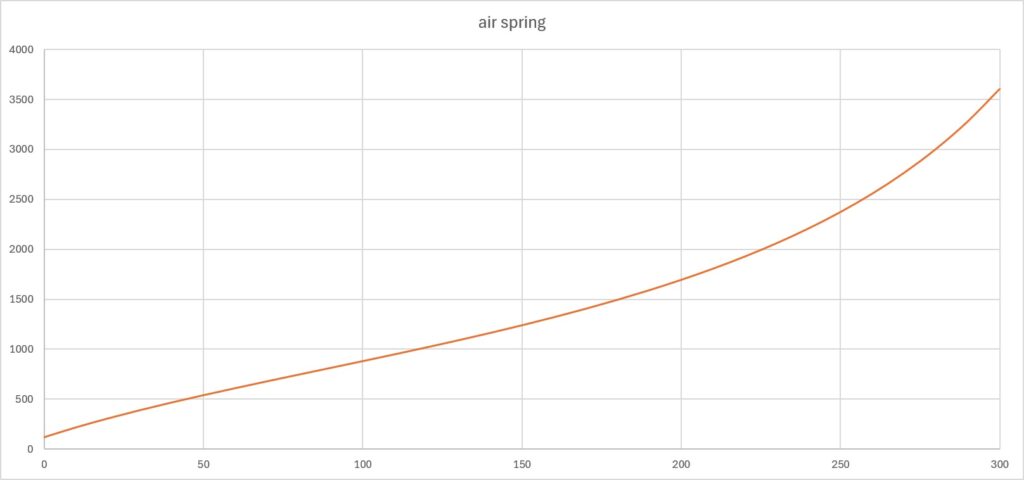
Air springs on the other hand follow the gas law where there are two influences on the rate, temperature and the adiabatic constant.
The everyday version of the gas law is:

Pressure, volume, and temperature are all connected, change one and the others change too.
What the formula is saying is that if you squeeze air into a smaller space (lower V), pressure goes up (higher P).
That’s the basic air‑spring effect, but the gas law adds something important. If the air gets hotter (higher T), pressure goes up even more.
The aspect that most riders don’t realise is the other gas formula:

This is the adiabatic effect. If you compress air, as we’ve seen it heats up. If you compress it quickly, the air doesn’t have time to transfer the heat into the cartridge walls for it to dissipate away, so it heats up. Hot air has higher pressure; higher pressure means more force.
If the compression is slow n = 1 which is known as an isothermal compression, the heat has time to transfer from the air to the cartridge and away.
If the compression is fast n ≈ 1.3–1.4 which is known as an adiabatic compression, the heat doesn’t have time to transfer. Before anyone shouts out Nitrogen, it has the same adiabatic constant.
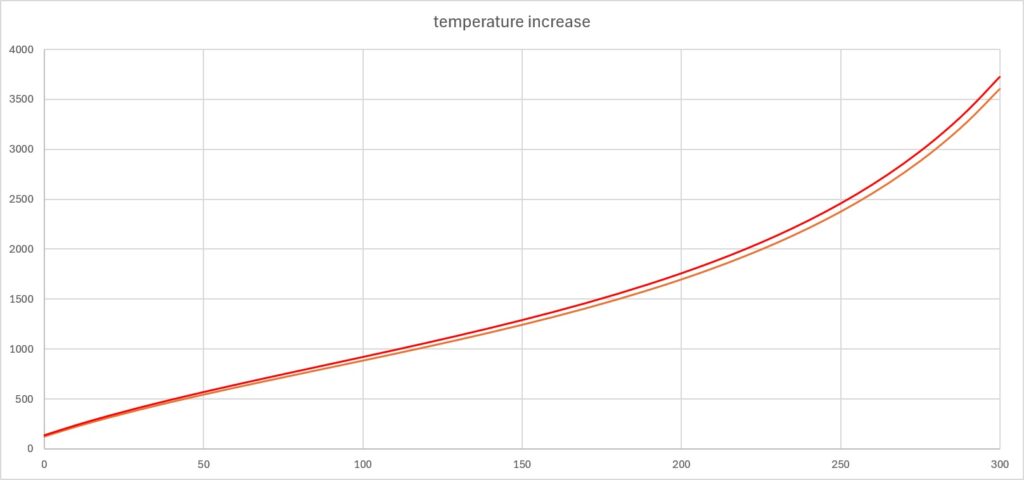
The two formulas are the root cause of the differences riders feel. Ride for a long time, the temperature rises and the pressure increases. Hit a bump hard and fast and the pressure ramps up exponentially due to the adiabatic effect.
Air springs are thermodynamic systems, not mechanical ones.
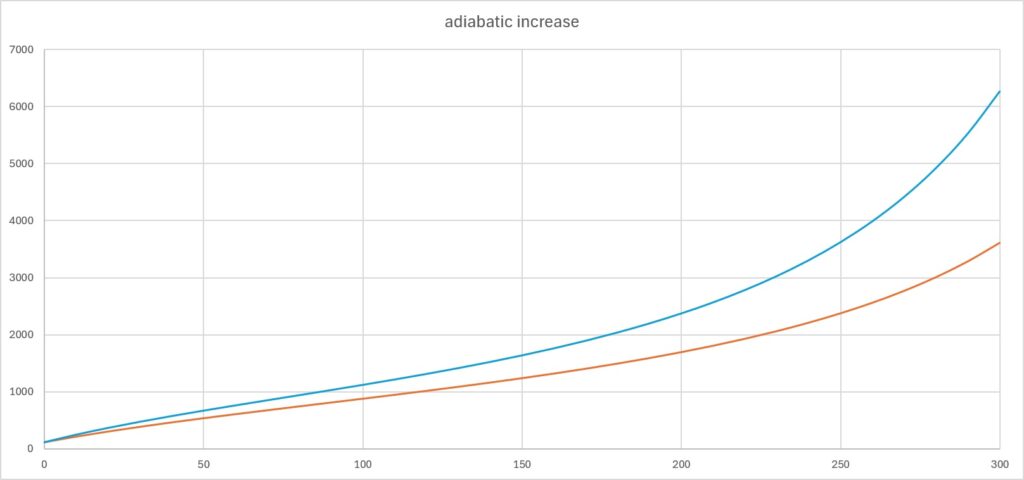
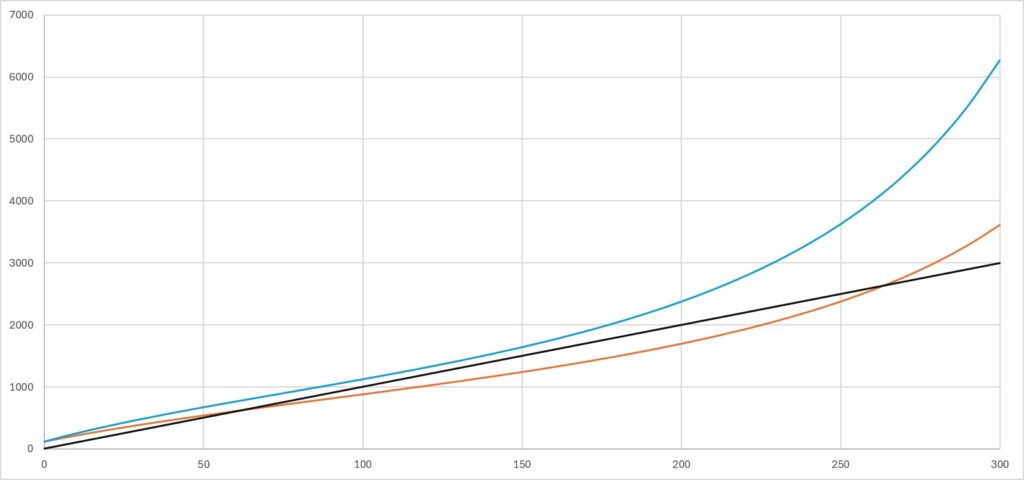
The reason that riders feel inconsistency is the fact that at any moment in time the forks are hard due to the change in temperature and the adiabatic effect. When riders say “they give good hold up” that is literally the adiabatic effect increasing the force. Riders will say “they’re very adjustable, I don’t need a big inventory of springs.
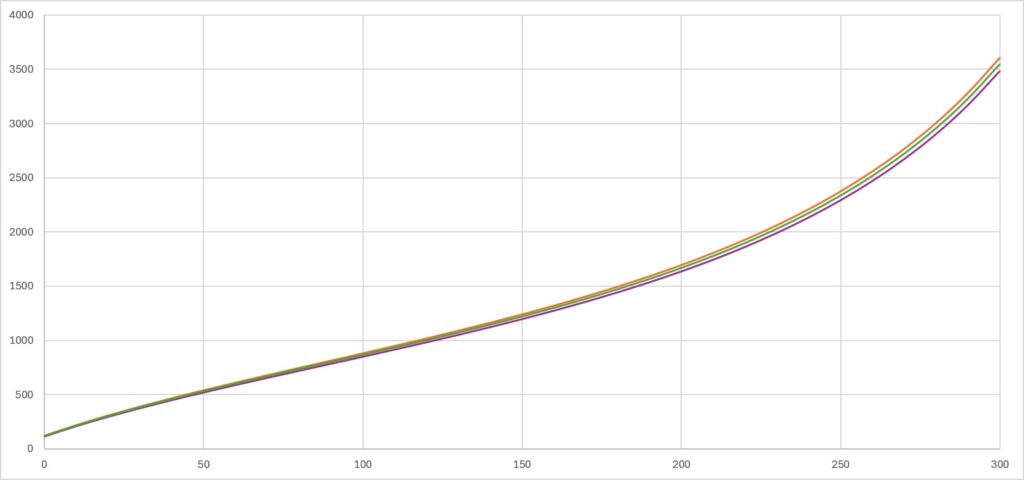
Steel springs only care how far they move. Air springs care how far, how fast, how hot, and how long you’ve been riding.